Claude Fable 5 Joins Paid Plans; SenseTime and JD Launch Models
Claude Fable 5 is coming to Max and Team Premium, while SenseTime and JD launch multimodal models and Tencent consolidates its embodied-AI stack.
Overview
This edition has 10 stories: Claude Fable 5's subscription rollout leads, followed by new multimodal models from SenseTime and JD and Tencent's embodied-AI matrix.
- Top · Claude Fable 5: Max and Team Premium access starts July 20 at 50% of the standard usage limit
- Top · SenseNova U1 Pro: SenseTime opens an invite-only preview with interleaved visual reasoning and up to 8K output
- Top · JoyAI model suite: JD launches real-time voice interaction and streaming video editing models
- Tencent embodied-AI matrix: VLM, RxBrain, and VLA form one physical-world agent stack
- GPT-5.6 efficiency data: OpenAI frames benchmark performance in terms of useful intelligence per dollar
- Amp subscriptions: $20 and $200 monthly plans enter beta
- Codex limit reset: Paid users receive fresh usage, but a reset is not a permanent plan increase
- FastFlowLM joins AMD: The local inference stack for Ryzen AI NPUs remains open
- Hugging Face incident: A malicious dataset becomes the entry point for an agentic attack
- BrainCo brain-to-robot control: The reported EEG-to-action path runs in under 200 milliseconds
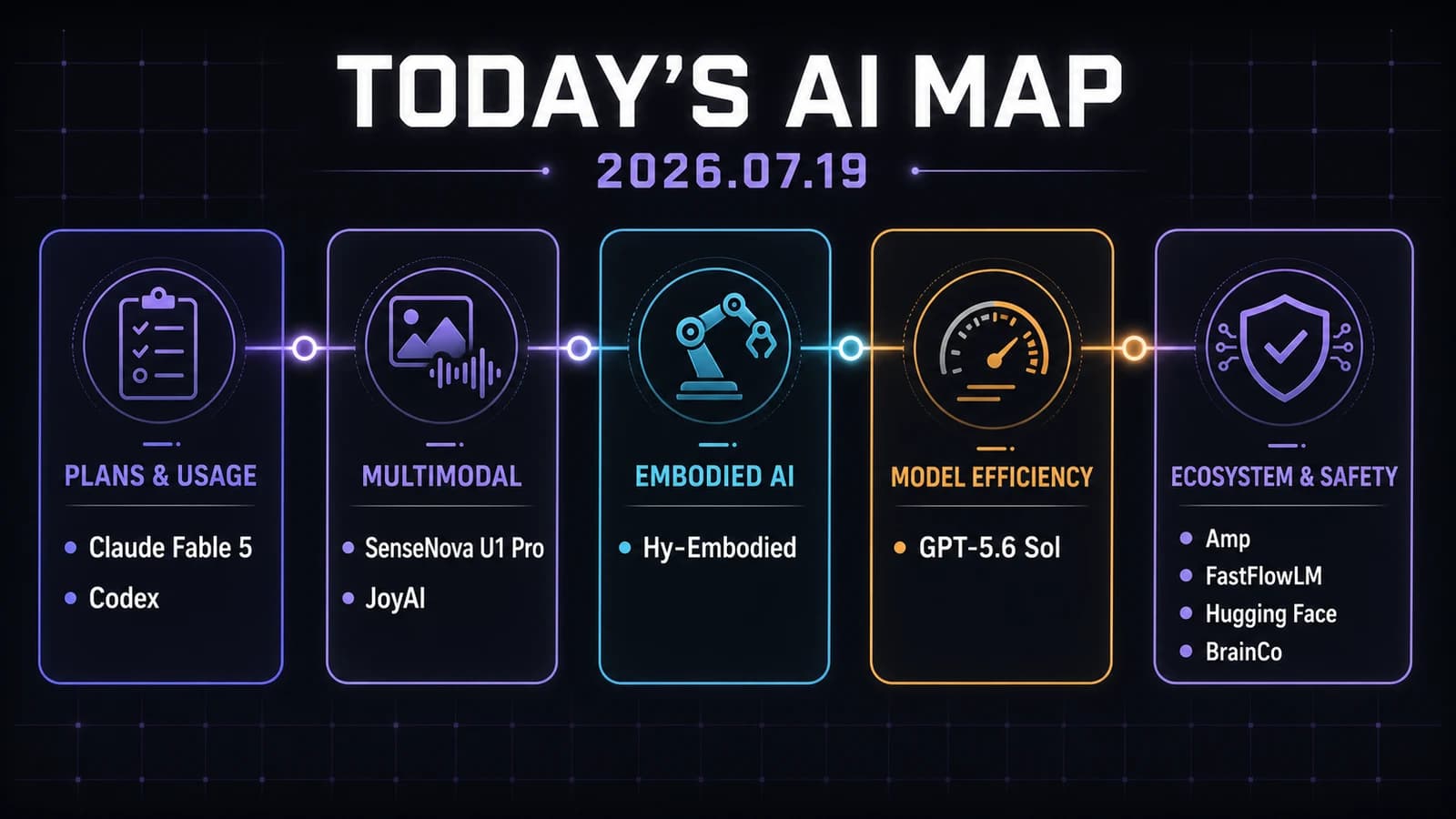
Figure 1: Ten stories form five threads, moving from models and subscriptions to the developer ecosystem and security.
Model Releases
Claude Fable 5 is coming to Max and Team Premium
Starting July 20, Max and Team Premium subscribers can use Claude Fable 5 within their plans, initially at 50% of the standard usage limit.
Anthropic says Fable 5 will be included in every Max and Team Premium plan. Pro and Team Standard users will access it through usage credits and receive a one-time $100 credit; the temporary 50% increase to Claude Code weekly limits has also been extended through August 19.
This is not unlimited access across every subscription. Plan allowances, usage credits, and temporary limit increases are separate mechanisms, and Anthropic says demand and available compute still require a phased rollout.
Source: Claude announcement · Claude Developers clarification
SenseNova U1 Pro enters preview with up to 8K output
SenseTime combines interleaved visual reasoning, complex text layout, and high-resolution generation in one image-creation model.
SenseNova U1 Pro uses the NEO-Unify architecture to bring understanding, generation, and actions into one system. Its official showcase covers knowledge graphics, design posters, and engineering illustrations; SenseTime says it supports native output up to 8K and iterative editing through a multi-turn Agentic Generation Loop.
Access is invite-only for now, with the full release, API, and pricing expected in August 2026. Claims about 8K output, text accuracy, and long-horizon editing currently rest mainly on company demonstrations rather than a common independent benchmark.
Source: SenseNova U1 Pro · SenseTime's official account · ITHome
JD launches JoyAI-Talker and JoyAI-Video-Edit
JD is pairing a low-latency voice agent with a video model designed for streaming, preview-as-you-edit workflows.
JoyAI-Talker targets real-time voice interaction with emotion understanding, tool use, memory, and multimodal intent recognition. JoyAI-Video-Edit supports custom visuals and incremental video editing, with JD positioning it for both video production and synthetic data generation for embodied AI.
Both models debuted during WAIC, but JD has not published general availability dates, APIs, pricing, or reproducible benchmarks. For now, they are better read as a product-roadmap announcement than broadly accessible services.
Source: JD JoyAI model suite · JD technical overview
Tencent unifies VLM, RxBrain, and VLA into an embodied-AI matrix
Tencent now covers embodied perception and reasoning, visual-language planning, and robot action in one model family.
Hy-Embodied-VLM-1.0 uses a roughly 30B-parameter MoE architecture with about 3B parameters active per token and includes weights plus Transformers and vLLM inference code. The roughly 6.2B-parameter RxBrain-1.0 generates target images between language-reasoning steps for world-state prediction and subgoal planning. Hy-Embodied-0.5-VLA handles continuous actions, with Tencent reporting over 95% accuracy at a six-second cycle on a flexible cosmetics production line.
The evidence differs across the three tracks: VLM and RxBrain have model cards and papers, while the VLA factory result is primarily a company case study. Deployment is also substantial—the full VLM BF16 weights need about 86GB of aggregate GPU memory.
Source: VLM model card · VLM paper · RxBrain model card · RxBrain paper · Tencent Tairos
GPT-5.6 Sol publishes a cost-performance comparison
OpenAI is shifting the pricing conversation from cost per token toward benchmark performance per dollar spent.
OpenAI's scorecard puts GPT-5.6 Sol at 72.7% on DeepSWE v1.1 versus 69.9% for Claude Fable 5, with 36.2% lower estimated API cost for Sol. The company also says its maximum-reasoning configuration reached a new high on the Artificial Analysis Coding Agent Index while using 54% fewer output tokens than another leading model.
All figures use OpenAI's selected tasks, configurations, and cost methodology, so they should not be generalized to every repository or production bill. Teams still need evaluations based on their own workloads.
Source: OpenAI: A scorecard for the AI age
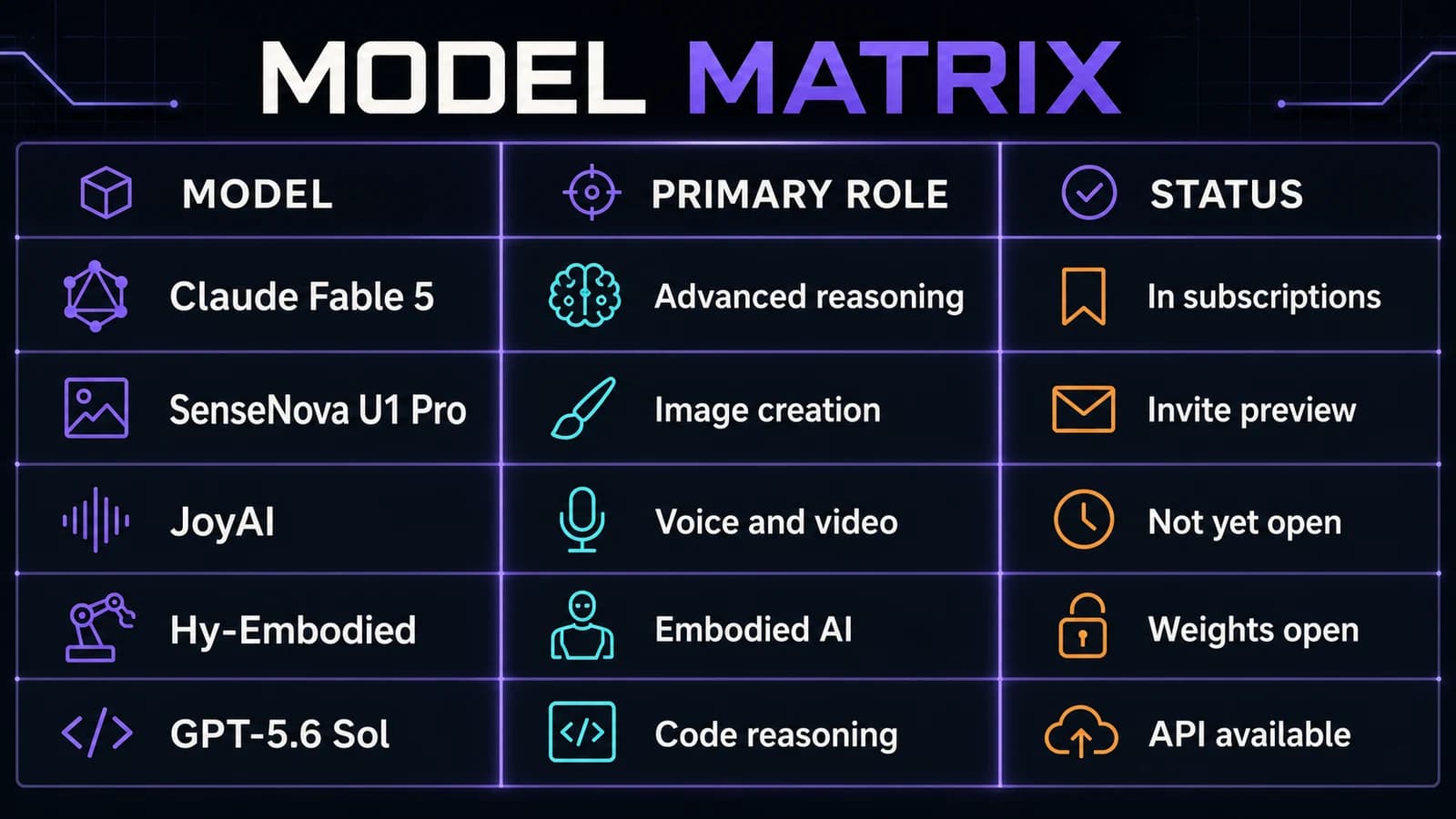
Figure 2: The primary role and current access status of the five model stories.
Developer Ecosystem and Industry
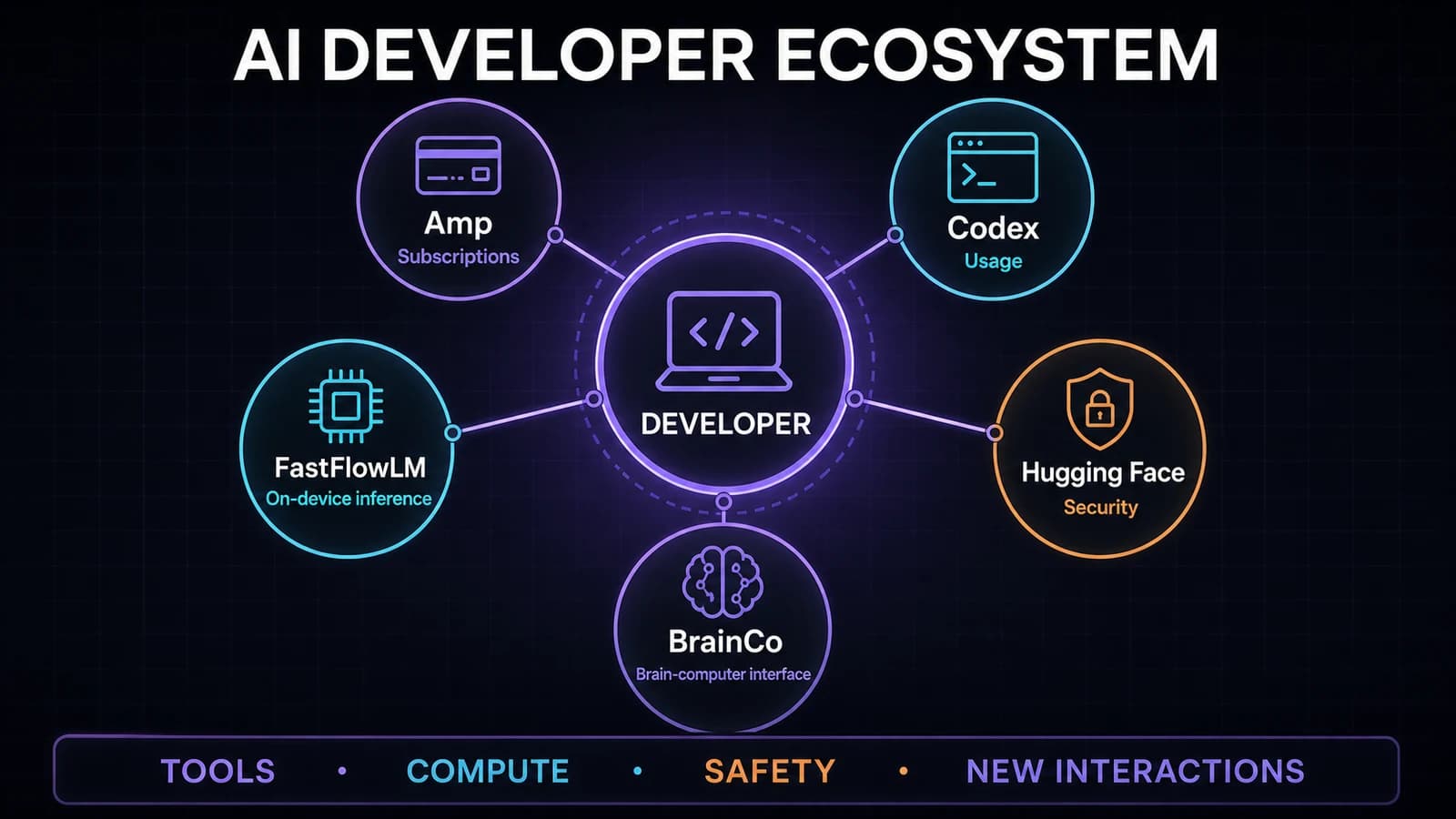
Figure 3: Developers now navigate subscriptions, usage, on-device inference, security, and new interaction models.
Amp adds $20 and $200 monthly subscriptions
Amp is supplementing pay-as-you-go pricing with two bundles that combine agent credit and cloud-orb runtime.
The beta Megawatt plan costs $20 per month and includes 750 hours of small orbs plus $20 in agent usage for low- and medium-tier models. Gigawatt costs $200 per month, includes 1,000 hours of large orbs and $200 in agent usage, and unlocks high and ultra-high models. Users can connect a ChatGPT subscription or buy credits for additional consumption.
These are beta plans, so allowances and terms may change. Pay-as-you-go remains available, and the better option depends on model tier, orb runtime, and monthly agent consumption.
Source: Amp subscription announcement
Codex and ChatGPT Work reset paid-user limits again
OpenAI has restored usage for all paid users, but a one-time reset should not be mistaken for a permanent increase to plan limits.
Codex lead Thomas Sottiaux announced a reset for every paid Codex and ChatGPT Work user and said the action might also have reset other rate limits. He had previously reported a combined active-user count of 9 million across the two products.
A third-party tracker aggregates past resets but is not affiliated with OpenAI. Historical frequency cannot predict the next reset, and temporary restored capacity is not a formal service-level commitment.
Source: Paid-user reset · Active-user announcement · Codex Resets
FastFlowLM joins AMD while its NPU stack stays open
AMD is bringing the FastFlowLM team in-house to strengthen local model inference across Ryzen AI clients and workstations.
FastFlowLM is an approximately 16MB local runtime for AMD Ryzen AI NPUs with an Ollama-like interface and context support up to 256K. Its benchmark page reports 19 tokens per second for GPT-OSS 20B on a Ryzen AI 7 350 system with 32GB of memory. At AMD, the team will continue working alongside the open IRON NPU compiler and Lemonade inference project.
The published results use project-selected hardware and models and do not represent every Ryzen AI device. Repository openness, supported hardware, and release cadence still need to be watched after the acquisition.
Source: AMD announcement · FastFlowLM · Device benchmarks
Hugging Face discloses an agentic attack launched by a dataset
A dataset with remote execution paths gave an attacker code execution on a processing node and a route into several internal clusters.
Hugging Face says the malicious dataset abused a remote-code loader and configuration templates. The attacker then collected cloud and cluster credentials and moved laterally over a weekend, while the response team analyzed more than 17,000 action logs. A small number of internal datasets and several service credentials were accessed without authorization.
The company says it has not found evidence that public models, datasets, Spaces, or its software supply chain were modified, while the impact on customer and partner data remains under review. Executable dataset loaders should be treated as code, not as ordinary data files.
Source: Hugging Face security incident report
BrainCo demonstrates a sub-200 ms brain-to-robot path
BrainCo connects EEG intent recognition to a general robot-control layer and reports an end-to-end path below 200 milliseconds.
The platform captures motor or control intent through an EEG headband and translates it into commands for arms, humanoids, or quadrupeds. WAIC demonstrations included picking up a cup and an apple. Its companion collection system records robot execution, human demonstrations, simulation, and operator EEG data together.
The sub-200 ms figure is a company-reported latency measurement, not a success rate for complex tasks. Public materials do not yet provide a standardized accuracy result across large user groups, different devices, or long-running sessions.
Source: BrainCo announcement · China News Service